Stop 01
The Hall
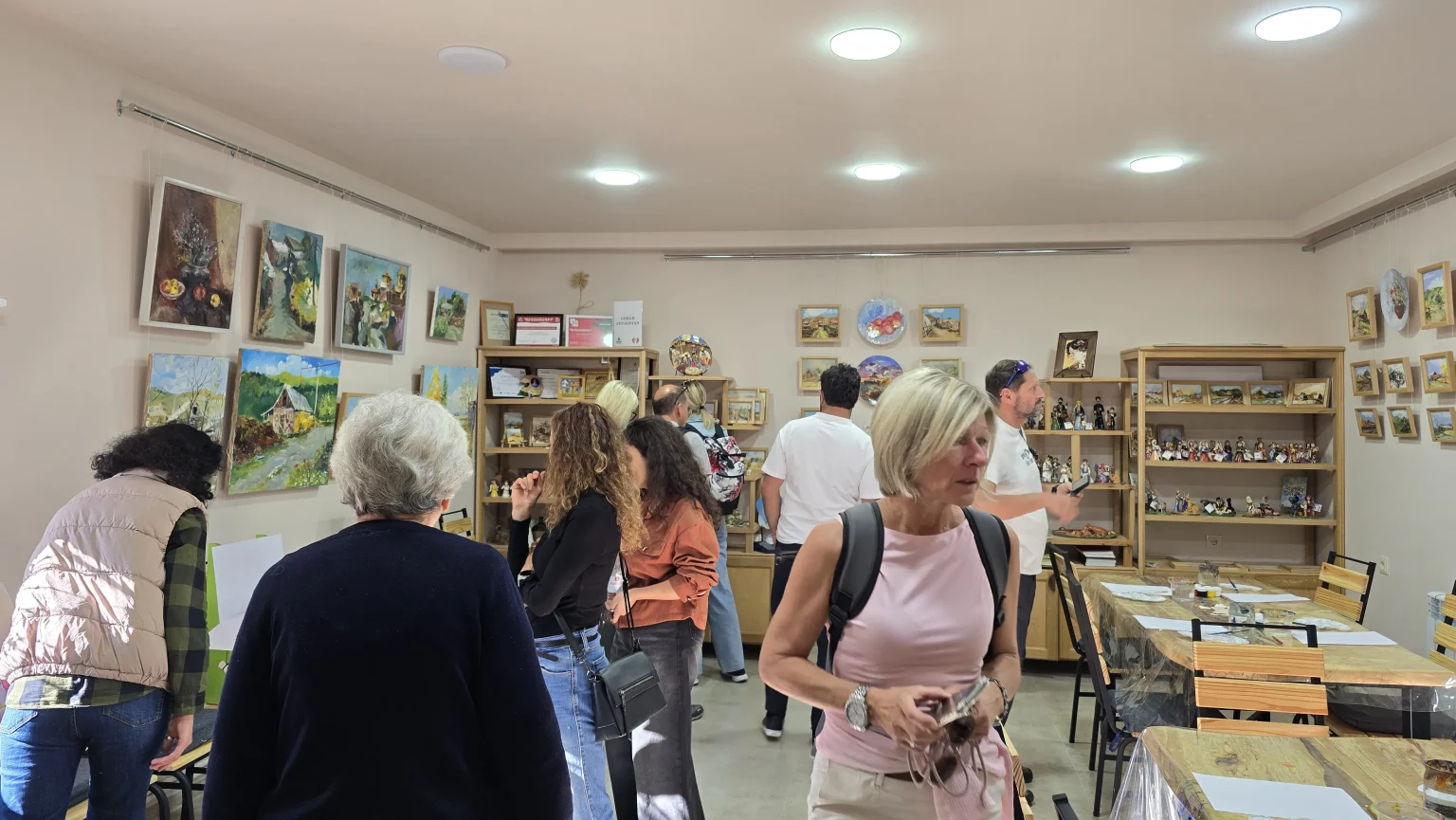
One long room, filled corner to corner. Paintings on the walls, clay figures on the shelves, and enough space between them to stop and look.

Gohar Petrosyan Art Center · Hatsik
Step inside the hall and walk it end to end. Ceramic paintings, village scenes in clay, angels and firs — made a few metres from where they hang. The film keeps playing on the left; the room uncovers itself on the right as you scroll.
Scroll to walk
One long room, filled corner to corner. Paintings on the walls, clay figures on the shelves, and enough space between them to stop and look.
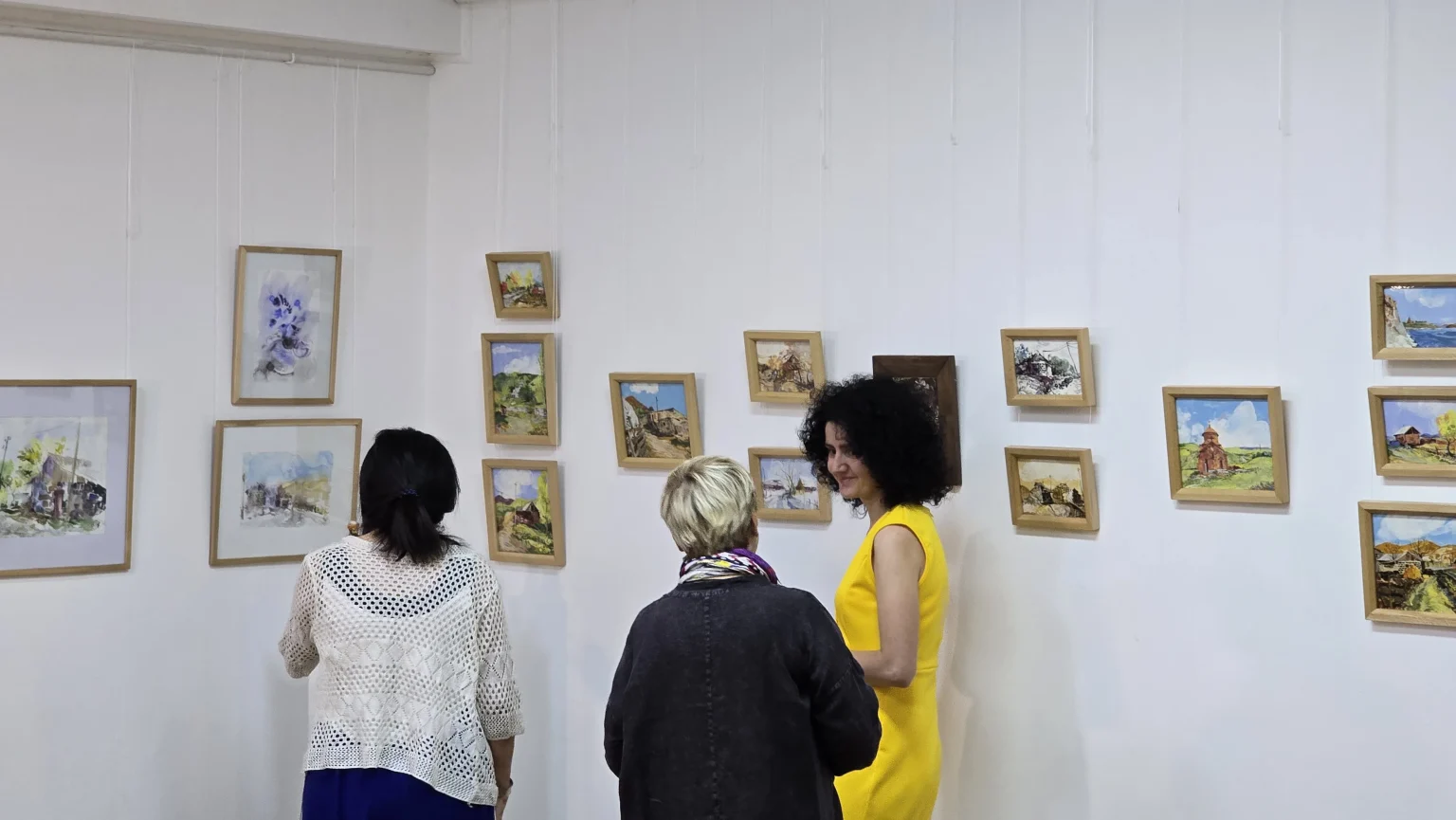
Small framed works, hung close together in a long row. People slow down here — the scenes are village-sized and ask to be read one at a time.
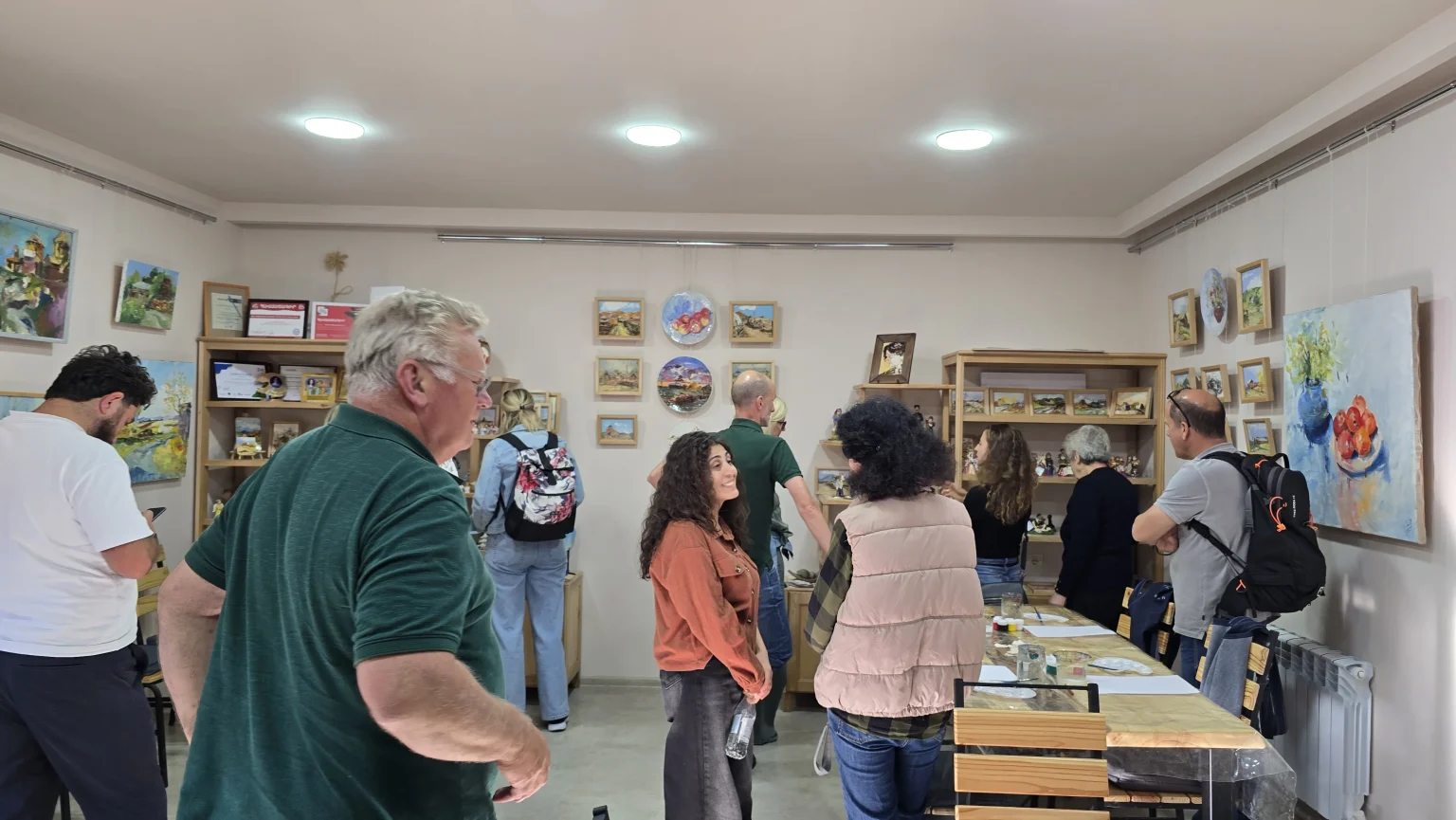
Painted ceramic plates sit between the landscapes, so the round shapes break up the row of frames.
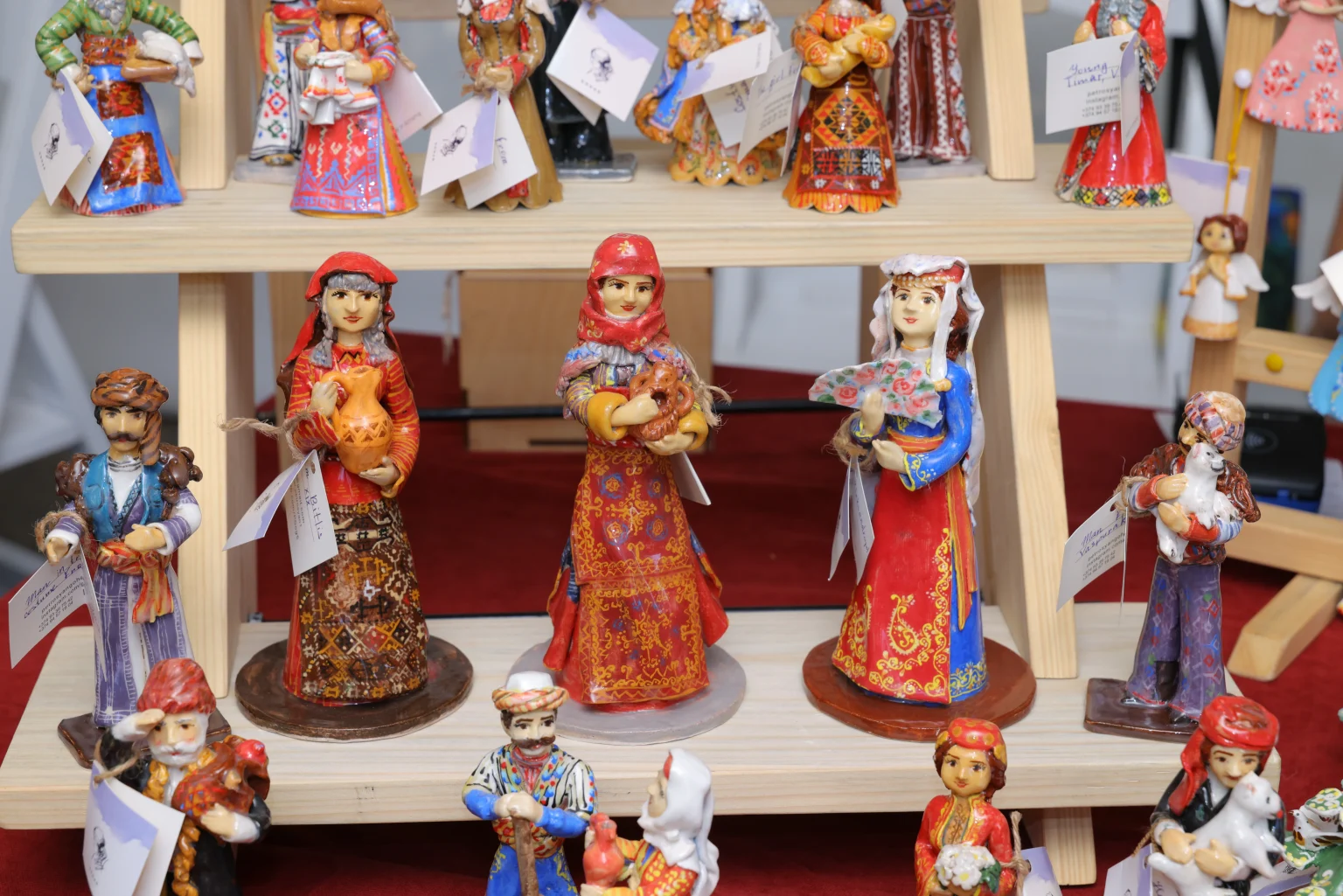
Figures in Armenian national costume — each one modelled, dressed and painted on its own, so no two stand quite the same way.
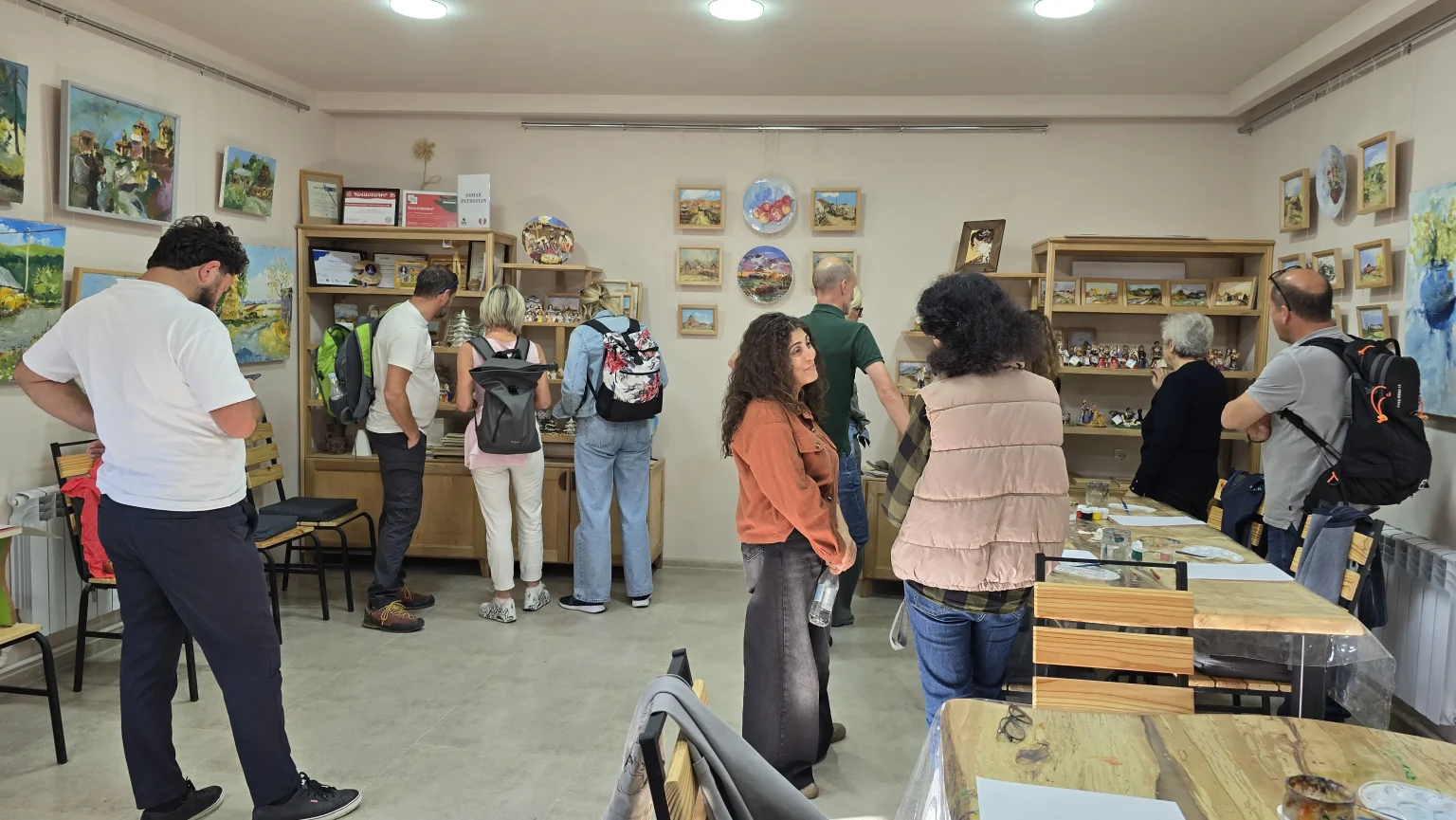
Wooden shelves run the length of the wall and carry the smaller pieces — the ones that fit in two hands.
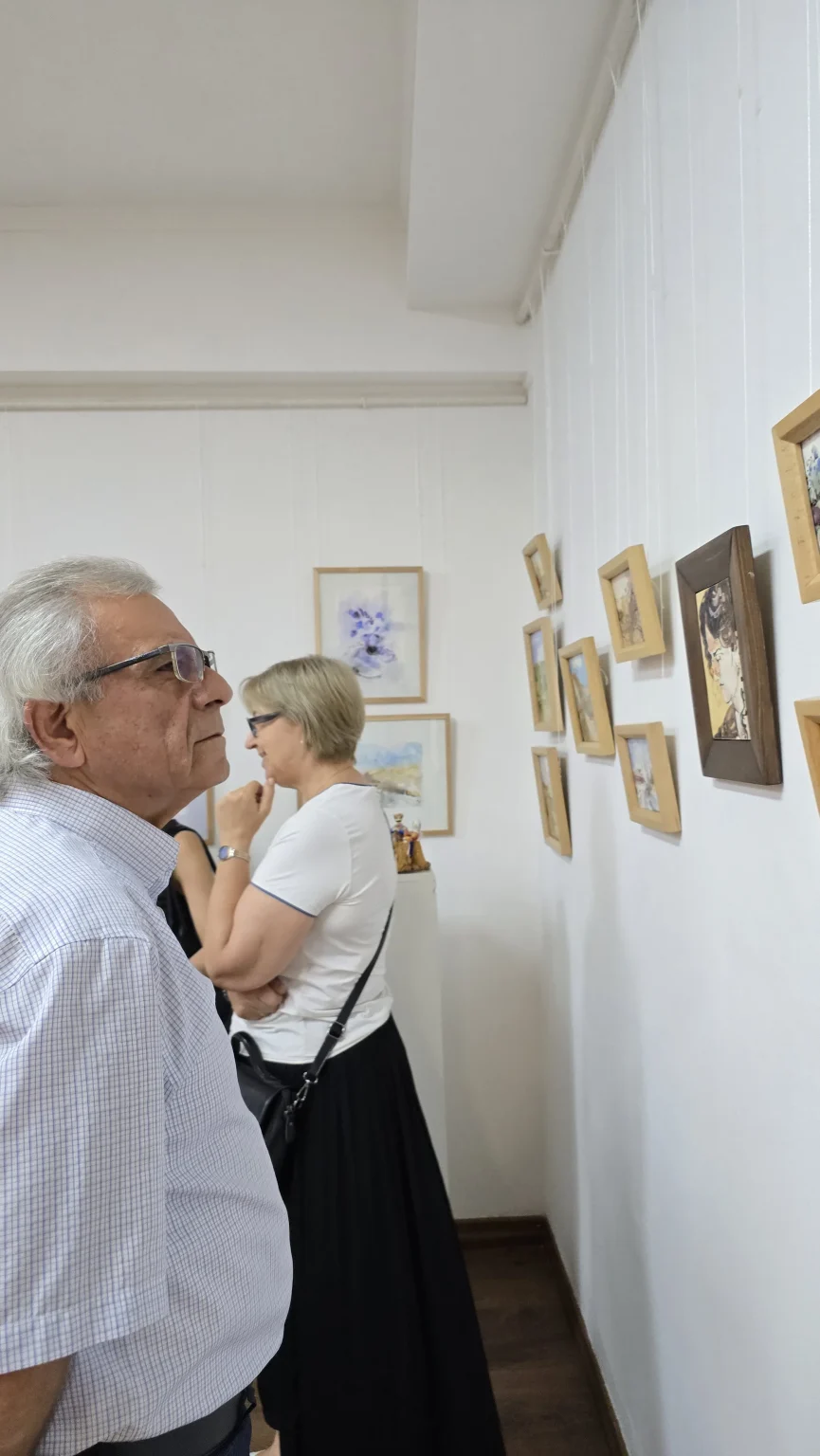
The small works reward standing still. Guests lean in, step back, then lean in again.
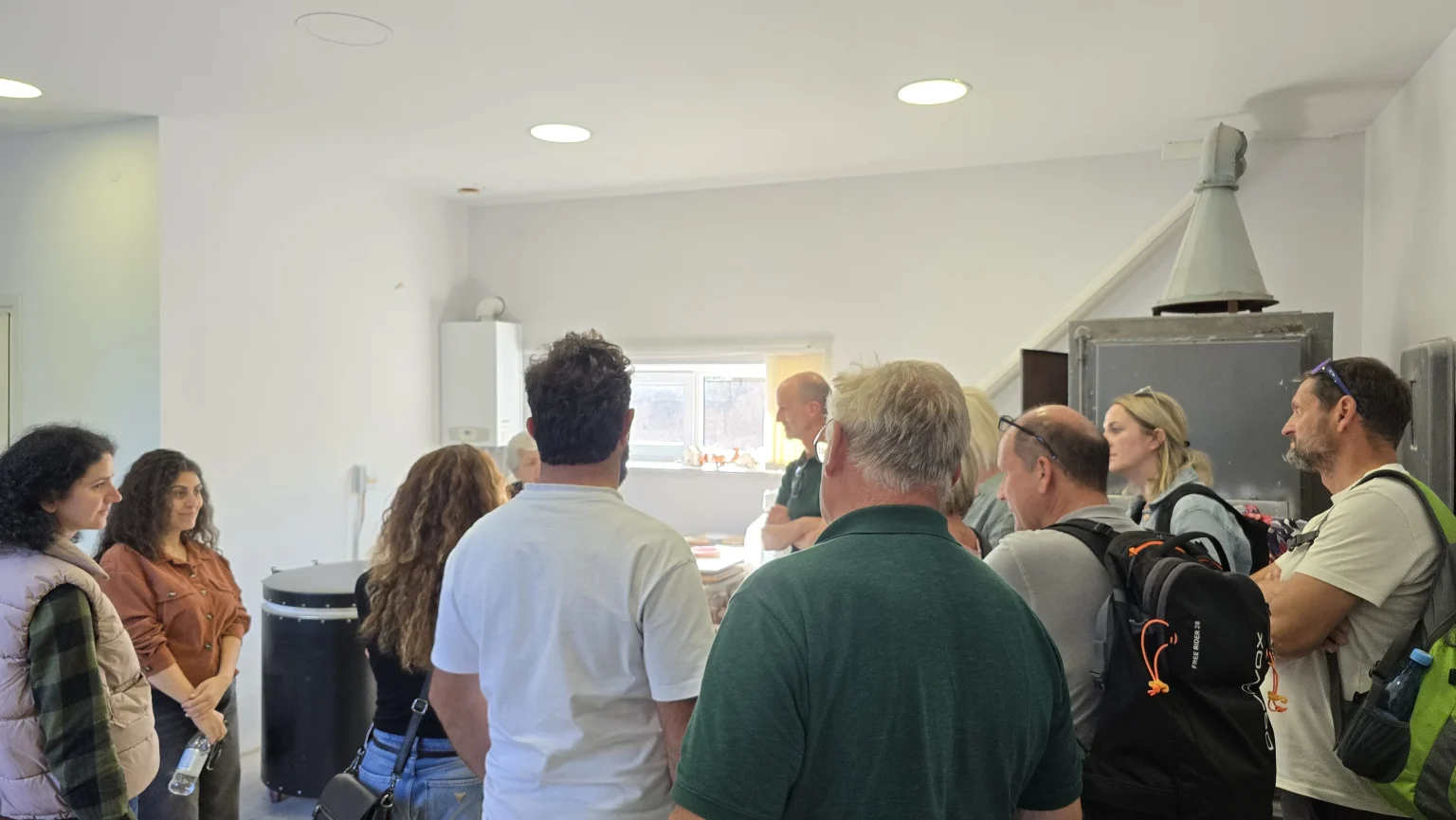
The kiln, where clay turns into ceramic. Everything on the shelves passed through here first.
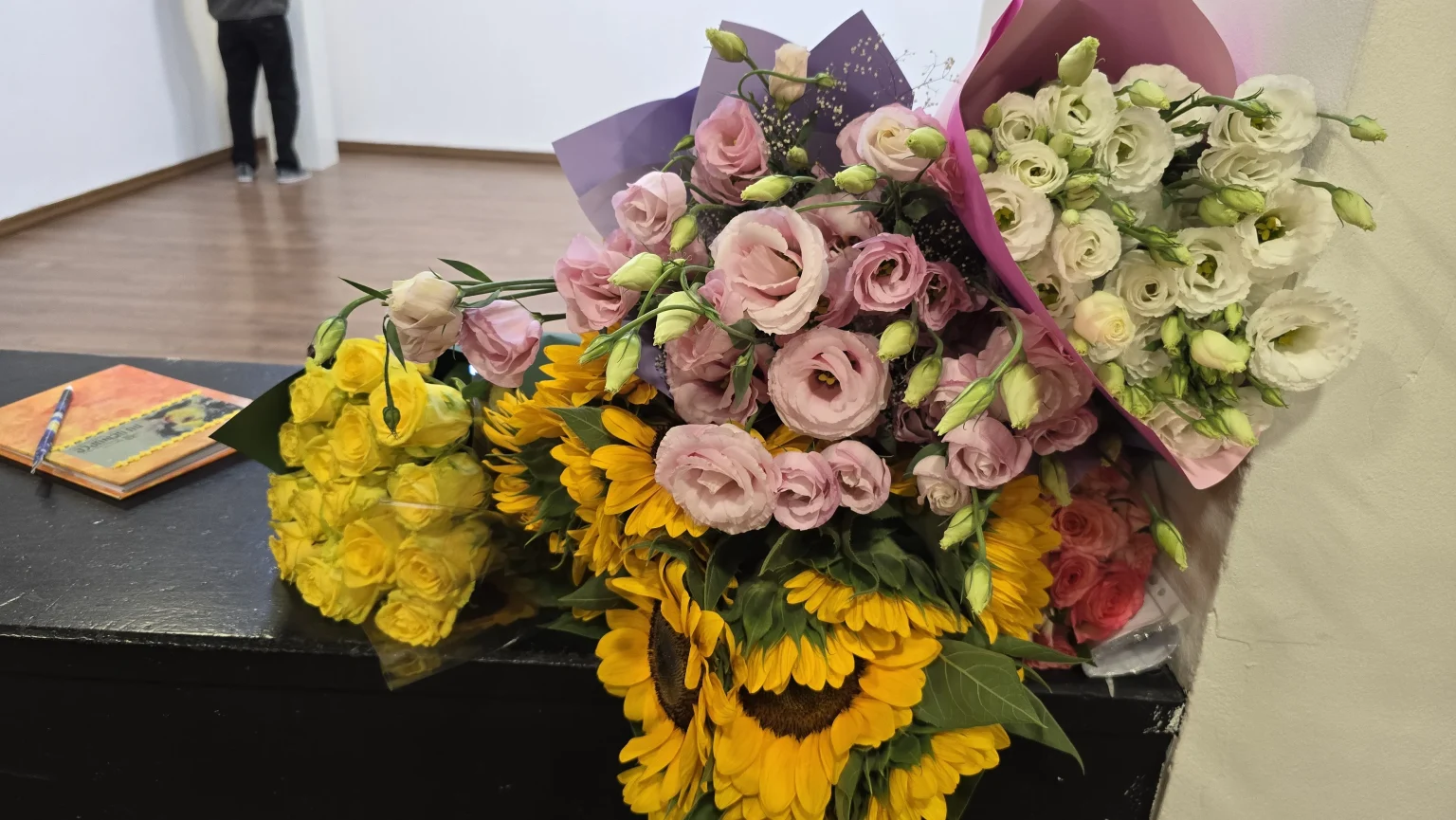
Flowers on the table, the hall full, and the work finally out where people can walk around it.
Gohar Petrosyan Art Center · Hatsik
Step inside the hall and walk it end to end. Ceramic paintings, village scenes in clay, angels and firs — made a few metres from where they hang. The film keeps playing on the left; the room uncovers itself on the right as you scroll.
Scroll to walk
One long room, filled corner to corner. Paintings on the walls, clay figures on the shelves, and enough space between them to stop and look.
Small framed works, hung close together in a long row. People slow down here — the scenes are village-sized and ask to be read one at a time.
Painted ceramic plates sit between the landscapes, so the round shapes break up the row of frames.
Figures in Armenian national costume — each one modelled, dressed and painted on its own, so no two stand quite the same way.
Wooden shelves run the length of the wall and carry the smaller pieces — the ones that fit in two hands.
The small works reward standing still. Guests lean in, step back, then lean in again.
The kiln, where clay turns into ceramic. Everything on the shelves passed through here first.
Flowers on the table, the hall full, and the work finally out where people can walk around it.